

If you’ve ever come home to a chewed-up deck railing, a gnawed table leg, or a pile of stick fragments on your porch, you know the frustration. German Shepherds are smart, loyal, and endlessly trainable — but they’re also notorious chewers, and wood seems to be a favorite target for many of them.
The good news is that this behavior almost always has an identifiable cause, and once you understand it, you can redirect it into something less destructive.
Is Wood Chewing Normal for German Shepherds?
To some degree, yes. German Shepherds are a working breed built for high energy, strong jaws, and sharp intelligence. They were bred to herd, guard, and problem-solve — not to lounge around all day.
When that mental and physical drive isn’t channeled somewhere productive, it tends to come out as chewing, digging, or other “destructive” behaviors.
Puppies chew for different reasons than adults do, so it helps to think about the behavior in two buckets: developmental chewing (mostly puppies) and behavioral chewing (mostly older dogs).
Both are common, and both are manageable — but the fixes look a little different depending on which one you’re dealing with.
Top Reasons German Shepherds Chew on Wood
1. Teething
Puppies between roughly 3 and 6 months old are cutting adult teeth, and their gums are sore. Chewing relieves that discomfort, and wood — with its firm-but-yielding texture — feels satisfying to gnaw on.
If your German Shepherd puppy is suddenly obsessed with sticks, deck posts, or wooden furniture legs, teething is often the culprit.
2. Boredom and Lack of Mental Stimulation
This is the number one cause in adult German Shepherds. This is a breed that needs a job. Without enough physical exercise or mental challenges — like training sessions, puzzle feeders, or scent work — they’ll find their own “job,” and destroying wood is a common one.
Chewing is self-rewarding: it relieves stress and passes the time, so a bored dog will keep coming back to it.
Related: 7 Ways to Tire Out a German Shepherd
3. Separation Anxiety or Stress
Some German Shepherds chew specifically when left alone, or during thunderstorms, fireworks, or other stressful events.
This kind of chewing tends to be more frantic and focused on exit points — door frames, window sills, deck stairs — rather than random objects around the yard. If the chewing is tied to specific triggers or only happens when you’re gone, anxiety is worth investigating.
Related: How I Fixed My German Shepherd’s Separation Anxiety
4. Natural Instinct

German Shepherds carry strong instincts from their working-dog ancestry, including denning behavior, foraging, and prey drive.
Sticks and wood scraps can trigger this instinctual chewing and “processing” behavior, especially outdoors where the smells and textures of natural wood are more appealing than a plastic toy.
4. Nutritional Deficiencies
This is less common, but worth mentioning. In rare cases, dogs that chew on unusual objects — including wood, dirt, or rocks — may be dealing with a condition called pica, which can sometimes be linked to nutritional gaps or underlying health issues.
If your dog is chewing on wood excessively and eating splinters, it’s worth ruling this out with your vet.
5. Attention-Seeking Behavior
German Shepherds are highly attuned to their owners. If chewing on the porch railing reliably gets you to jump up, yell, or engage with them, some dogs learn that this is an effective way to get attention — even negative attention is still attention to a dog craving interaction.
6. Texture and Taste Appeal
Finally, sometimes it’s simple: wood has an appealing texture to chew, especially bark, and sticks are just the right size and shape for a satisfying gnaw.
Outdoor wood — deck rails, fence posts, fallen branches — often gets weathered and softened, making it even more chewable.
Is Wood Chewing Dangerous for German Shepherds?
Wood chewing isn’t just a property problem — it can be a health risk too.
- Splinters: Wood splinters can lodge in the gums, tongue, or throat, or cause internal injury if swallowed.
- Choking hazards: Larger chunks of wood can become choking hazards or cause intestinal blockages if ingested.
- Toxicity: Treated, painted, or stained wood may contain chemicals that are toxic if chewed or swallowed. This includes pressure-treated deck wood, which is a common target for outdoor chewing.
- Dental damage: Repeated hard chewing can wear down or fracture teeth over time.
If your dog is chewing on treated wood, or you notice bleeding gums, vomiting, or lethargy after a chewing episode, contact your vet promptly.
How to Stop a German Shepherd From Chewing Wood
Provide Appropriate Chew Alternatives
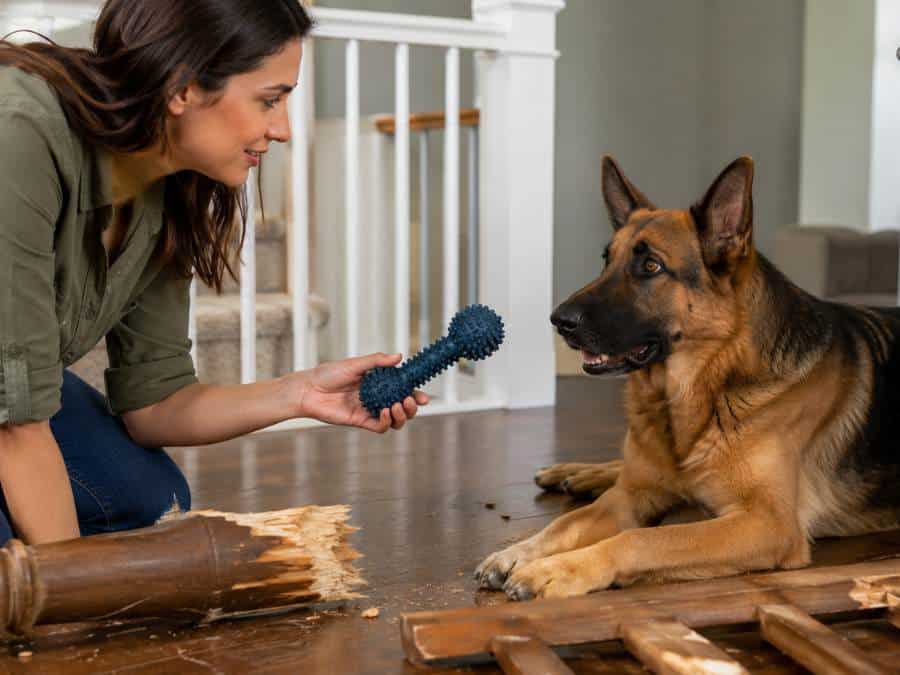
Give your dog something better to redirect that instinct toward — durable rubber chew toys, nylon bones, or natural chews designed for heavy chewers. German Shepherds have strong jaws, so look for chew toys rated for aggressive chewers specifically.
Increase Physical Exercise
A tired German Shepherd is a calmer German Shepherd. Aim for at least 60–90 minutes of real exercise a day — running, fetch, hiking, or structured play — to burn off the energy that would otherwise go into destructive chewing.
Add Mental Enrichment
Physical exercise alone often isn’t enough for this breed. Puzzle feeders, scent games, obedience training, and trick training all give their brains something to do, which reduces boredom-driven chewing significantly.
Use Bitter-Tasting Deterrents
Pet-safe bitter sprays applied to fence posts, deck railings, or furniture legs can make wood less appealing without harming your dog. Reapply after rain for outdoor surfaces.
Supervise and Manage Access
While you’re working on training, limit unsupervised access to problem areas. Crate training, baby gates, or simply keeping your dog closer to you during unsupervised time can prevent chewing from becoming a habit in the first place.
Address Underlying Anxiety
If anxiety seems to be driving the behavior, work on desensitization to being alone, maintain a consistent routine, and consider calming aids or a conversation with your vet about additional support for more severe cases.
When to See a Vet
Most wood chewing is behavioral and resolves with the right combination of exercise, enrichment, and management. But you should check in with your vet if you notice:
- Sudden, excessive chewing that comes out of nowhere
- Signs of pica (eating non-food items regularly)
- Chewing paired with anxiety symptoms like pacing, drooling, or destructive behavior only when left alone
- Any signs of injury from splinters or ingested wood
Final Thoughts
Wood chewing in German Shepherds is almost always explainable — teething, boredom, instinct, or stress are the usual suspects. The behavior is rarely a sign of a “bad dog”; it’s usually a sign of a smart, energetic dog that needs more outlets for its energy and instincts. With the right mix of exercise, mental stimulation, and appropriate chew toys, most German Shepherds can be redirected away from your deck railing and onto something built to take the abuse.