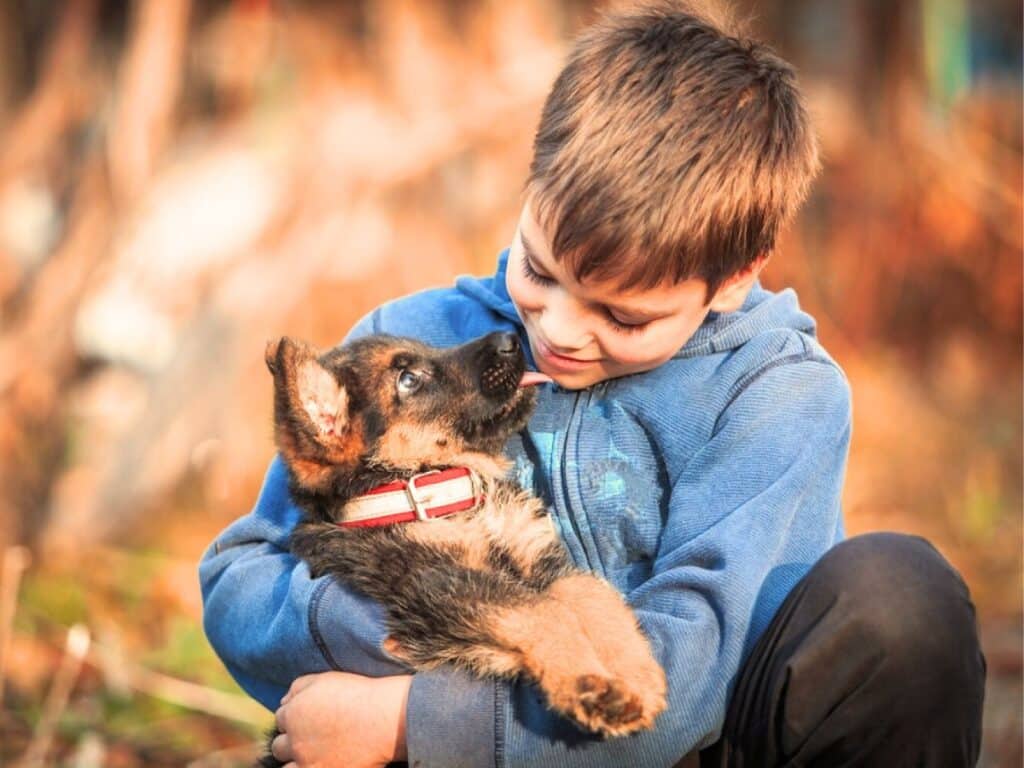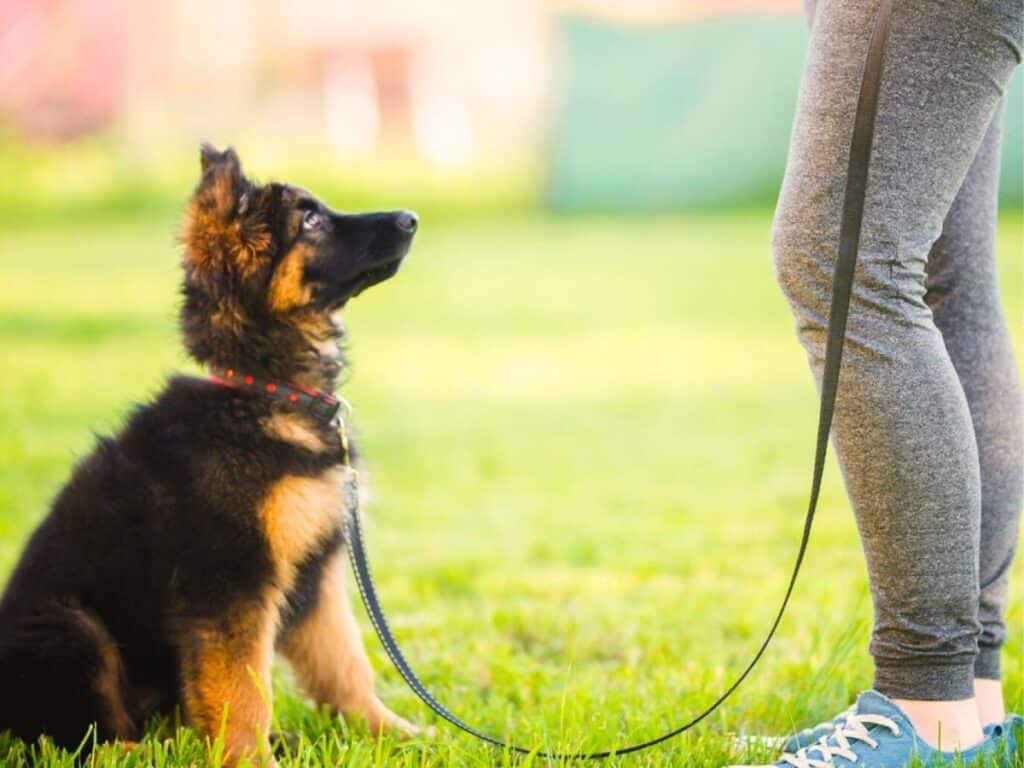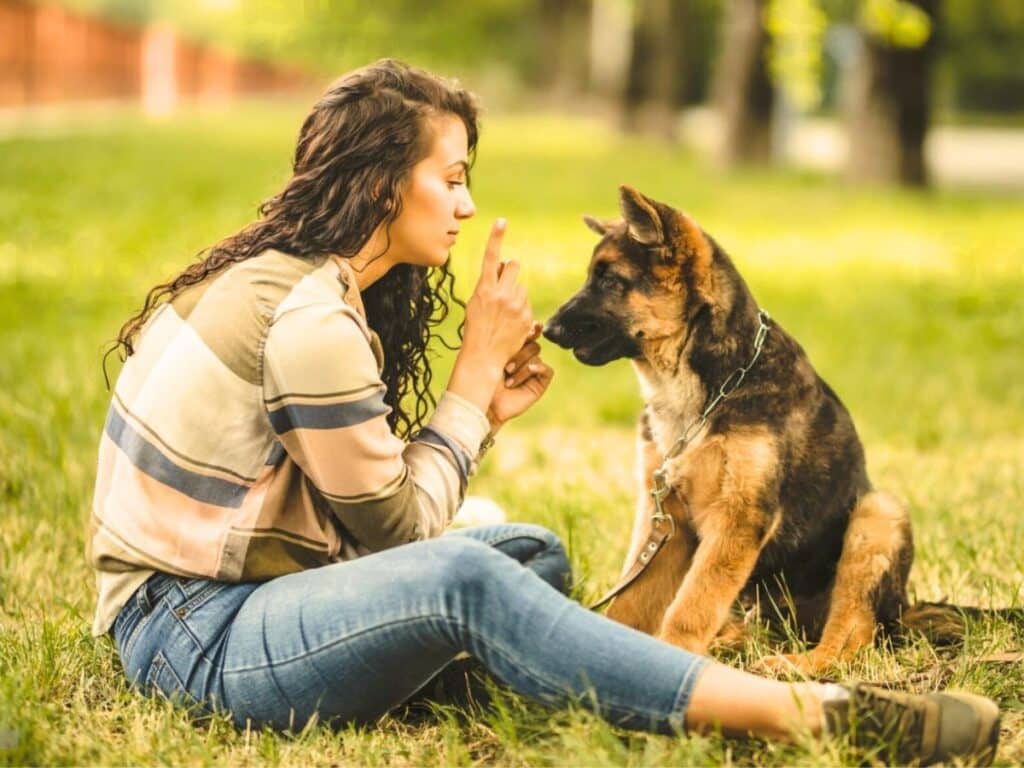
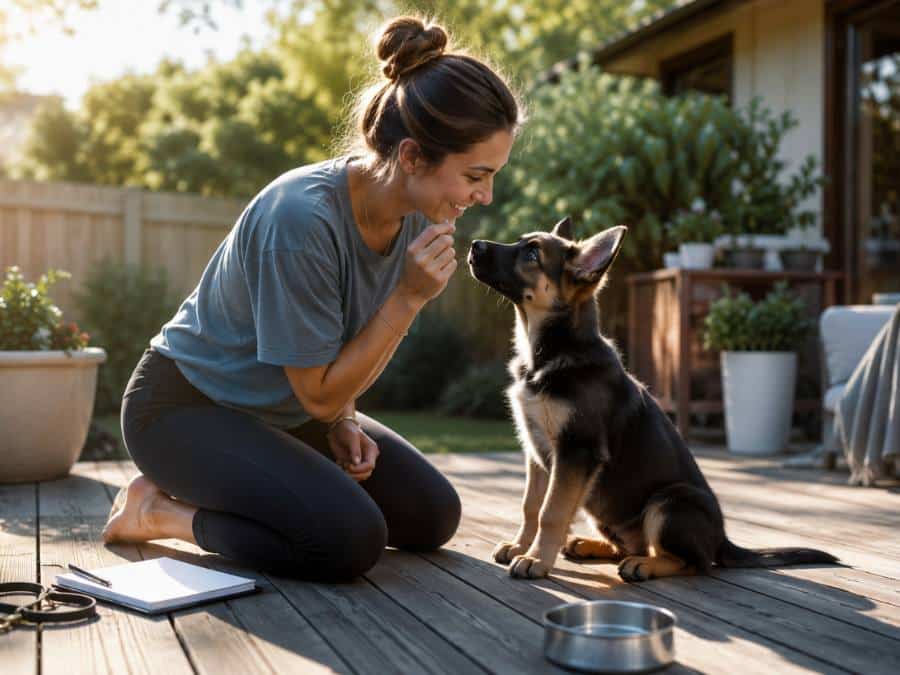
Bringing home a German Shepherd puppy is one of the most exciting — and honestly, most exhausting — things you’ll ever do. I still remember the first week with my GSD puppy. I had no idea what I was doing, and he had no idea either. There was chaos, a lot of accidents, and more than a few sleepless nights.
What changed everything? A real daily schedule.
I’m not talking about a rigid military timeline. I mean a predictable, age-appropriate routine that my puppy could count on. Once I got that in place, everything else — potty training, sleep, even his attitude — clicked into place.
If you’re raising a German Shepherd puppy right now, this guide is for you.
Why German Shepherd Puppies Need a Daily Schedule
German Shepherds are working dogs at heart. They’re intelligent, eager, and wired to follow structure. Without it, they get anxious, bored, or destructive — sometimes all three.
I quickly realized my German Shepherd puppy became wild whenever he skipped naps or had an unpredictable feeding time. He’d bite harder, bark more, and basically turn into a furry little tornado. Consistent routines gave him something to anchor to.
Schedules also make potty training dramatically faster. When a puppy eats, plays, and sleeps on a predictable cycle, their body follows suit — and you can get them outside at exactly the right moments.
Beyond behavior, routines reduce stress for your puppy. A young GSD brain is absorbing everything. Knowing what comes next gives them security they desperately need.
General Daily Routine Basics
Before we dive into age-specific schedules, here are the building blocks that apply to every stage:
- Potty break immediately after waking up — every single time, no exceptions
- Feed at consistent times — puppies thrive on predictable meals
- Enforce naps — an overtired puppy is a misbehaving puppy
- Train in short sessions — 5–10 minutes is plenty for young dogs
- Establish a calm bedtime routine — wind down before lights out
I noticed consistency mattered more than perfection. If you’re off by 30 minutes one day, the world won’t end. But sticking close to the routine most days makes a huge difference.
German Shepherd Puppy Schedule: 8–10 Weeks
At this age, your puppy is a baby in every sense. They sleep up to 18–20 hours a day, have zero bladder control, and need to go outside constantly.
Sample Daily Schedule:
- 6:30 AM — Wake up, immediately outside for potty
- 7:00 AM — Breakfast (small meal)
- 7:15 AM — Short, gentle play (10 minutes max)
- 7:30 AM — Nap in crate (1.5–2 hours)
- 9:30 AM — Wake up, outside for potty
- 9:45 AM — Short training session (5 minutes, name recognition, “sit”)
- 10:00 AM — Free time or supervised play
- 10:30 AM — Nap
- 12:00 PM — Wake up, outside, lunch
- 12:20 PM — Play and socialization
- 1:00 PM — Nap (1.5–2 hours)
- 3:00 PM — Wake up, outside, light play
- 5:00 PM — Dinner
- 5:15 PM — Short play and training
- 6:30 PM — Nap
- 8:30 PM — Last play session, potty break
- 9:00 PM — Bedtime in crate, potty break right before
Common challenges at this stage: Everything. But mostly nighttime crying and constant accidents. I used to set an alarm to take my puppy out once in the middle of the night. It felt brutal at 2 AM, but it prevented accidents in the crate and helped him learn faster.
Related: German Shepherd Behavior Stages By Age: Puppy To Senior Years
German Shepherd Puppy Schedule: 10–12 Weeks
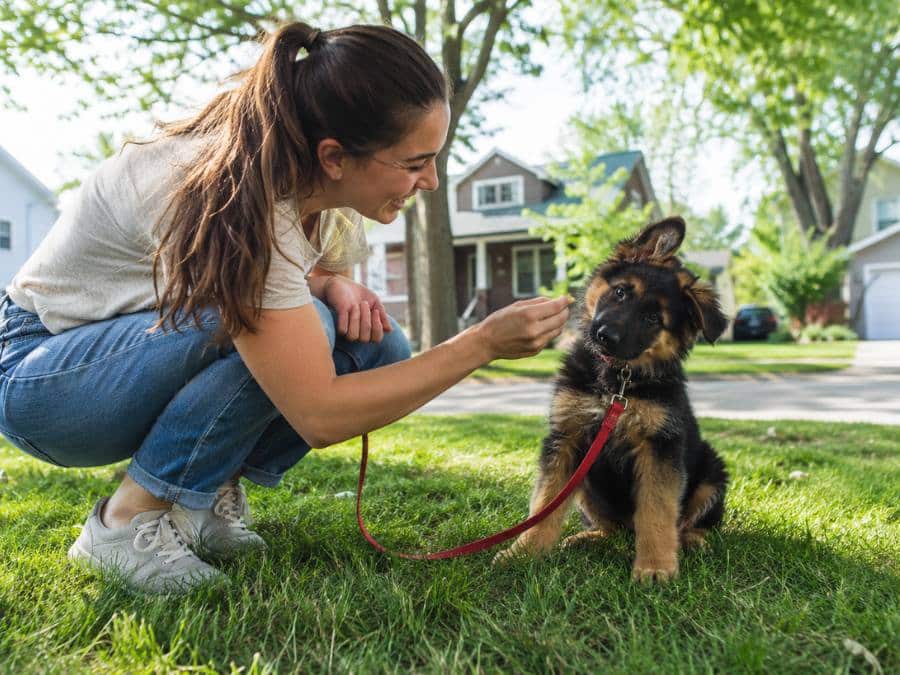
Things are slightly more manageable now. Your puppy is starting to recognize patterns and may even whine to signal they need to go outside. Bladder control is still very limited, but improving.
Sample Daily Schedule:
- 6:30 AM — Wake up, potty break immediately
- 7:00 AM — Breakfast
- 7:15 AM — Play and short training (sit, stay, come)
- 8:00 AM — Nap in crate (1.5–2 hours)
- 10:00 AM — Potty break, play, brief training
- 11:00 AM — Nap
- 12:30 PM — Lunch, potty break, socialization time
- 2:00 PM — Nap
- 3:30 PM — Potty break, play
- 5:30 PM — Dinner
- 6:00 PM — Play, light training, potty break
- 8:00 PM — Calm wind-down time
- 9:00 PM — Final potty break, bedtime
I used to take my puppy outside immediately after every meal, and it made potty training much easier. At this age, they usually need to go within 10–15 minutes of eating. Don’t wait. Just go.
German Shepherd Puppy Schedule: 3–4 Months
Now we’re talking. Your puppy has a bit more stamina, a sharper mind, and — thankfully — better bladder control. They can hold it for about 2–3 hours during the day now.
Sample Daily Schedule:
- 6:30 AM — Wake up, potty break
- 7:00 AM — Breakfast, potty after eating
- 7:30 AM — Training session (10 minutes) and play
- 9:00 AM — Nap (1–1.5 hours)
- 10:30 AM — Potty break, socialization walk (10–15 minutes)
- 12:00 PM — Lunch, potty break
- 12:30 PM — Play, enrichment activity
- 1:30 PM — Nap
- 3:30 PM — Potty break, training session
- 5:00 PM — Dinner, potty break
- 5:30 PM — Playtime
- 7:30 PM — Calm wind-down (no intense play)
- 9:00 PM — Last potty break, bedtime
German Shepherds at this age start testing boundaries. Stay consistent. An enforced nap isn’t cruel — it’s a gift. An overtired 3-month-old GSD will chew your baseboards and your sanity.
German Shepherd Puppy Schedule: 4–6 Months
Your puppy is hitting a stride now. They’re energetic, curious, and learning at an impressive pace. They can hold their bladder for 3–4 hours during the day, though nighttime accidents can still happen.
Sample Daily Schedule:
- 6:30 AM — Wake up, potty break
- 7:00 AM — Breakfast, potty break
- 7:30 AM — Training (15 minutes) + socialization walk
- 9:00 AM — Rest time (crate or quiet space)
- 11:00 AM — Potty break, enrichment game
- 12:00 PM — Lunch
- 12:30 PM — Short training or play
- 2:00 PM — Rest
- 4:00 PM — Potty break, walk (15–20 minutes)
- 6:00 PM — Dinner, potty break
- 7:00 PM — Training session, calm play
- 9:00 PM — Last potty break, bedtime
At this stage, your GSD might start pushing back during training. Keep sessions fun and short. Frustration — theirs or yours — never helps.
Feeding Schedule Tips
I fed my puppy three times a day until he was about four months old, then transitioned to twice a day. Most GSDs do well on this schedule:
- 8 weeks–4 months: 3 meals per day
- 4–12 months: 2 meals per day (morning and evening)
- Always use age-appropriate food formulated for large breeds
- Don’t free-feed — it makes potty training nearly impossible
- Measure every meal — GSD puppies are prone to overeating
Keep a consistent meal time and your pup’s bathroom schedule will practically set itself.
Related: How Much To Feed a German Shepherd Puppy: GSD Feeding Chart
Potty Training Schedule Tips
Here’s the truth about potty training a German Shepherd puppy: it’s mostly about you being consistent, not about them being smart. They’re plenty smart. They just can’t hold it.
Take your puppy outside:
- Immediately after waking up (every single time)
- Within 10–15 minutes after every meal
- After every play session
- Every 1–2 hours at 8–10 weeks, gradually stretching as they grow
- Right before bedtime
I used to say the same phrase every time we went outside — “go potty” — and eventually he’d go on cue. Pick a word, stick with it. Don’t celebrate when they go inside (obviously), but do make a big deal when they go outside.
Accidents will happen. Clean them up with an enzyme cleaner and move on. Punishing puppies after the fact doesn’t work.
Related: How To Potty Train a German Shepherd Puppy Easily
Sleep & Nap Schedule
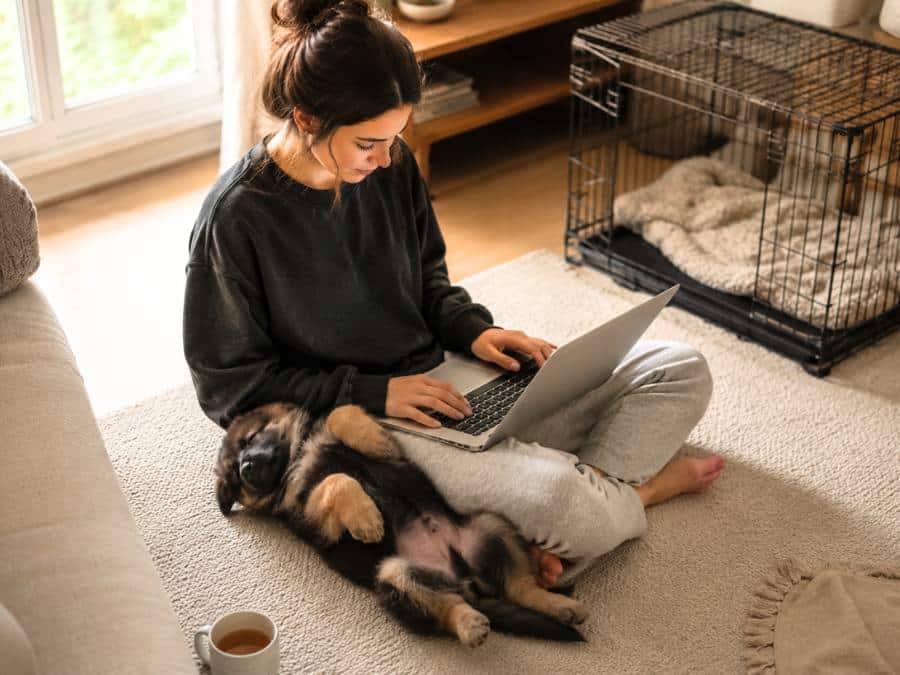
Young German Shepherd puppies need a shocking amount of sleep — up to 18–20 hours at 8 weeks. Even at four months, they need 14–16 hours.
I used to think my puppy’s nap schedule was optional. It is not.
Skipping naps leads to overtired, overstimulated puppies who bite harder and learn worse. Think of a cranky toddler and double it.
Enforce naps in the crate. Make the crate a positive, quiet place with a comfortable bed and maybe a worn t-shirt of yours. Most puppies will settle once they realize it’s rest time.
As your puppy grows, naps get shorter and less frequent. By 4–6 months, one solid midday rest plus a shorter afternoon nap is usually enough.
Related: German Shepherd Sleep Habits From Puppyhood to Senior Years
Training & Mental Stimulation Routine
German Shepherds are brilliant dogs, and that’s both a blessing and a responsibility. They need mental exercise just as much as physical exercise — sometimes more.
Short training sessions (5–10 minutes for young puppies, 10–15 minutes by 4–6 months) work far better than long ones. End every session on a success.
Good training activities by age:
- 8–12 weeks: Name recognition, sit, eye contact, crate training, leash introduction
- 3–4 months: Sit, stay, down, come, loose-leash walking basics
- 4–6 months: All of the above, plus leave it, place, and impulse control games
Puzzle feeders, sniff walks, and Kongs stuffed with frozen food also count as mental stimulation. I’d give my puppy a frozen Kong in his crate during nap time — he’d fall asleep mid-lick.
Exercise Guidelines by Age
One of the most important things I learned about raising a GSD puppy: don’t over-exercise them. Their joints and growth plates are still developing, and too much impact exercise can cause long-term damage.
A general rule of thumb: 5 minutes of structured exercise per month of age, twice a day.
- 8 weeks: 5–10 minutes of gentle play
- 3 months: 15 minutes of walking or play
- 4 months: 20 minutes
- 5 months: 25 minutes
- 6 months: 30 minutes
Avoid repetitive high-impact activities like jogging or jumping until your vet clears them, usually around 12–18 months. Puppies can run and play freely — just don’t force distance running.
Related: How Much Exercise Does a German Shepherd Need?
Common Puppy Schedule Mistakes to Avoid
I made most of these, so learn from my experience:
- Letting your puppy sleep all day unsupervised — they’ll be wired at midnight
- Skipping potty breaks to save time — you’ll pay for it in accidents
- Long training sessions — puppies lose focus fast; keep it short and positive
- Free-feeding — it makes housetraining unpredictable
- Too much exercise too soon — joint damage is real in large breed puppies
- Inconsistent wake-up times — the schedule only works if you follow it too
- Waiting too long to crate train — the crate is your best friend; introduce it early
Related: 10 Costly Mistakes New German Shepherd Puppy Owners Make
Signs Your Puppy’s Schedule Needs Adjusting
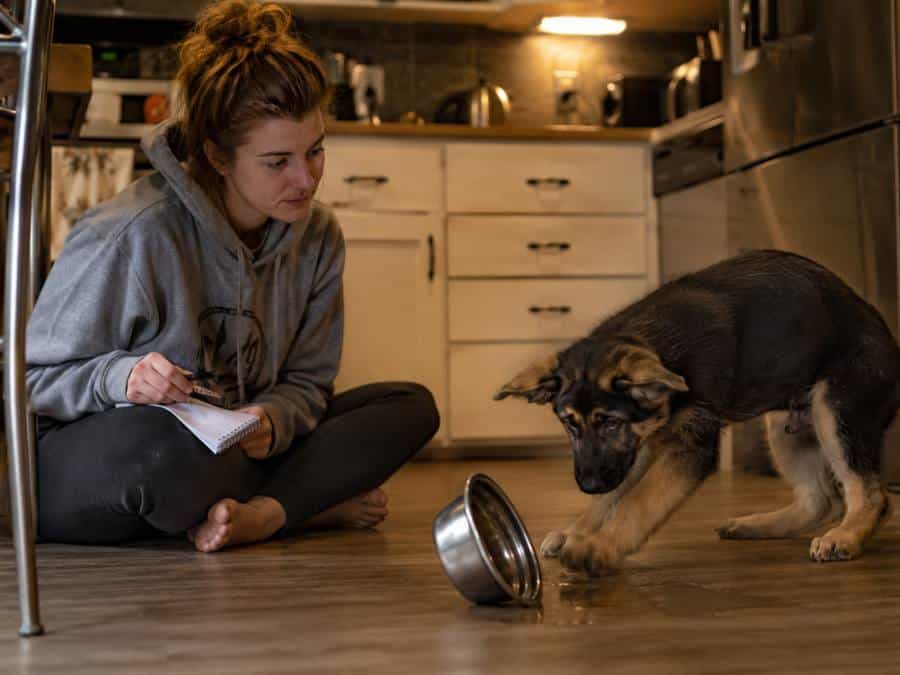
Your puppy will tell you when things aren’t working. Watch for:
- Frequent accidents inside (may need more potty breaks or smaller meals)
- Biting and zoomies at the same time every day (usually means an overtired puppy needing a nap)
- Refusing food (portions may be too large or feeding times too close together)
- Waking unusually early or crying at night (may need a later evening feeding or potty break)
- Low energy or excessive sleeping (worth a vet check if it’s new)
Final Thoughts
Raising a German Shepherd puppy isn’t always easy. There are days when you’ll question your life choices while scrubbing the carpet at 6 AM. But there are also moments — when your puppy finally sits on command, or falls asleep on your feet, or greets you at the door like you’ve been gone for a year — that make every exhausting minute worth it.
The schedule doesn’t have to be perfect. It just has to be consistent. Start simple, adjust as your puppy grows, and give yourself grace when it doesn’t go perfectly.
You and your German Shepherd are figuring this out together. And honestly? That’s the best part.