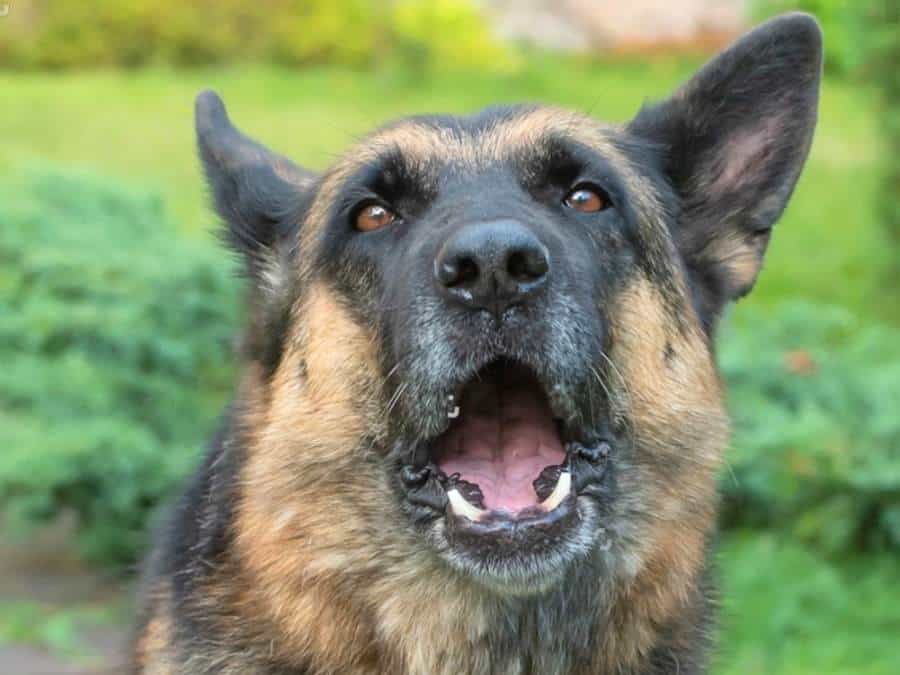

Picture this: it’s a quiet evening, and suddenly your German Shepherd throws its head back and lets out a long, mournful howl at a passing ambulance siren.
Or maybe it happens the moment you step out the door for work, echoing through the house long after you’re gone. If you’ve ever wondered why your dog does this, you’re not alone.
Howling is one of the most ancient and instinctual behaviors in the canine world, and German Shepherds, with their close ties to their wolf ancestors, are particularly known for it.
This article breaks down exactly why German Shepherds howl, when it’s normal, when it might signal a problem, and what you can do about it.
Is Howling Normal for German Shepherds?
Yes, howling is a completely normal part of German Shepherd communication. This breed descends from a long line of working dogs with strong instinctual ties to wolves, whose howls served as long-distance communication across packs.
German Shepherds retain a wide vocal range that includes barking, whining, grumbling, and howling, each serving a different communicative purpose.
While barking tends to signal immediate alerts and whining often expresses need or discomfort, howling is typically reserved for long-range communication or emotional expression. In most cases, occasional howling is simply your dog’s way of talking, not a sign that something is wrong.
7 Common Reasons German Shepherds Howl
Communication With Other Dogs
Howling carries much farther than barking, making it an ideal way for dogs to communicate over long distances. If your German Shepherd hears another dog howling in the neighborhood, it may howl back as a way of saying “I’m here” or acknowledging the other dog’s presence.
This is a direct echo of wolf pack behavior, where howling helped separated pack members locate one another.
Responding to Sounds
Many German Shepherds howl in response to high-pitched sounds like sirens, musical instruments, or even other dogs howling on television.
Researchers believe certain frequencies may sound similar to a howl to a dog’s sensitive ears, triggering an instinctual vocal response. This type of howling is usually brief and stops once the triggering sound fades.
Separation Anxiety or Loneliness
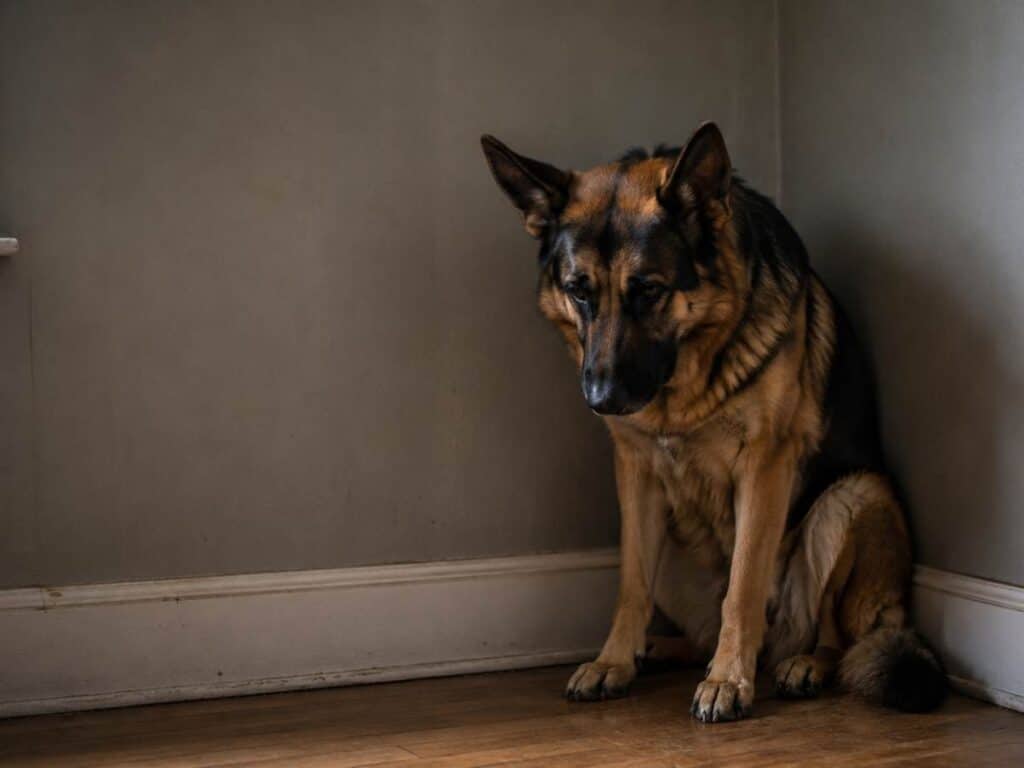
German Shepherds are famously loyal and bond closely with their families, which can make them prone to separation anxiety. If your dog howls primarily when left alone, it may be expressing distress at being separated from you.
This type of howling is often accompanied by other anxious behaviors like pacing, destructive chewing, or excessive drooling.
Because the breed was developed to work closely alongside handlers, many German Shepherds simply aren’t wired to spend long stretches of the day in isolation, and howling becomes their way of voicing that discomfort until the household feels complete again.
Related: How I Fixed My German Shepherd’s Separation Anxiety
Seeking Attention
Some German Shepherds learn that howling gets a reaction, whether it’s you rushing over, laughing, or even scolding them.
Dogs are quick to repeat behaviors that reliably produce a response, so a howl that started as a genuine expression can become a learned attention-seeking tactic over time.
Expressing Pain or Discomfort
Howling can also be a signal of physical pain or discomfort, particularly if it appears suddenly and out of character. Dogs experiencing joint pain, digestive issues, or injury may vocalize in ways that include howling.
Since German Shepherds are prone to hip and elbow dysplasia as they age, a change in howling behavior can sometimes be one of the earliest clues that something is physically bothering them.
If your usually quiet German Shepherd starts howling unexpectedly, it’s worth ruling out a medical cause before assuming it’s purely behavioral.
Excitement or Greeting Behavior
Not all howling is negative. Some German Shepherds howl when greeting their owners after time apart, or during moments of high excitement like the start of a walk or playtime. This type of howling is usually accompanied by a wagging tail, relaxed body language, and other clearly happy signals.
Age-Related Howling
Puppies often experiment with howling as they discover their full vocal range, sometimes producing awkward or inconsistent sounds as they learn.
On the other end of the spectrum, senior German Shepherds may howl more due to cognitive decline, confusion, or hearing loss, which can cause disorientation, especially at night.
When Howling Signals a Problem

While occasional howling is normal, certain patterns are worth paying closer attention to. Excessive or prolonged howling, especially when paired with destructive behavior or accidents in the house, often points to underlying anxiety that may need behavioral intervention.
Sudden howling that appears out of nowhere, particularly in an older dog or one that isn’t usually vocal, can indicate pain or a medical issue and warrants a veterinary check.
The key is distinguishing between howling that’s simply communicative and howling that reflects genuine physical or emotional distress.
How to Manage or Reduce Excessive Howling
The first step in managing excessive howling is identifying the trigger, whether it’s isolation, a specific sound, or a medical issue.
Since German Shepherds are a high-energy working breed, ensuring your dog gets enough physical exercise and mental stimulation each day can significantly reduce anxiety-driven vocalizations.
For dogs that howl at specific triggers like sirens or doorbells, counter-conditioning techniques, gradually exposing your dog to the sound at a low volume while pairing it with treats and praise, can help reduce the reaction over time.
If separation anxiety is the root cause, gradual desensitization to being alone, starting with very short absences and slowly increasing the duration, along with proper crate training, can make a meaningful difference.
Keeping a simple log of when the howling happens, what preceded it, and how long it lasts can also help you and your vet or trainer spot patterns that aren’t obvious in the moment.
If howling persists despite these efforts, or if you suspect pain is involved, consulting a veterinarian or a certified dog trainer is the best next step.
Fun Facts About German Shepherd Howling
German Shepherds share a surprisingly close genetic relationship with wolves compared to many other domesticated breeds, which helps explain their strong howling instinct.
The breed is also famous online for its “talking” abilities, with countless viral videos showing German Shepherds using a range of howls, grumbles, and vocalizations that almost sound like words, a trait that has helped cement their reputation as one of the most vocally expressive dog breeds.
Conclusion
Howling is, in most cases, simply part of what makes a German Shepherd a German Shepherd, a natural echo of their wolf ancestry and a genuine form of communication.
By paying attention to when and why your dog howls, you can quickly tell the difference between normal vocal expression and a sign that something needs your attention.
Whether it’s a response to a siren, a greeting at the door, or a call to another dog across the neighborhood, understanding your German Shepherd’s howl helps you understand your dog just a little bit better.